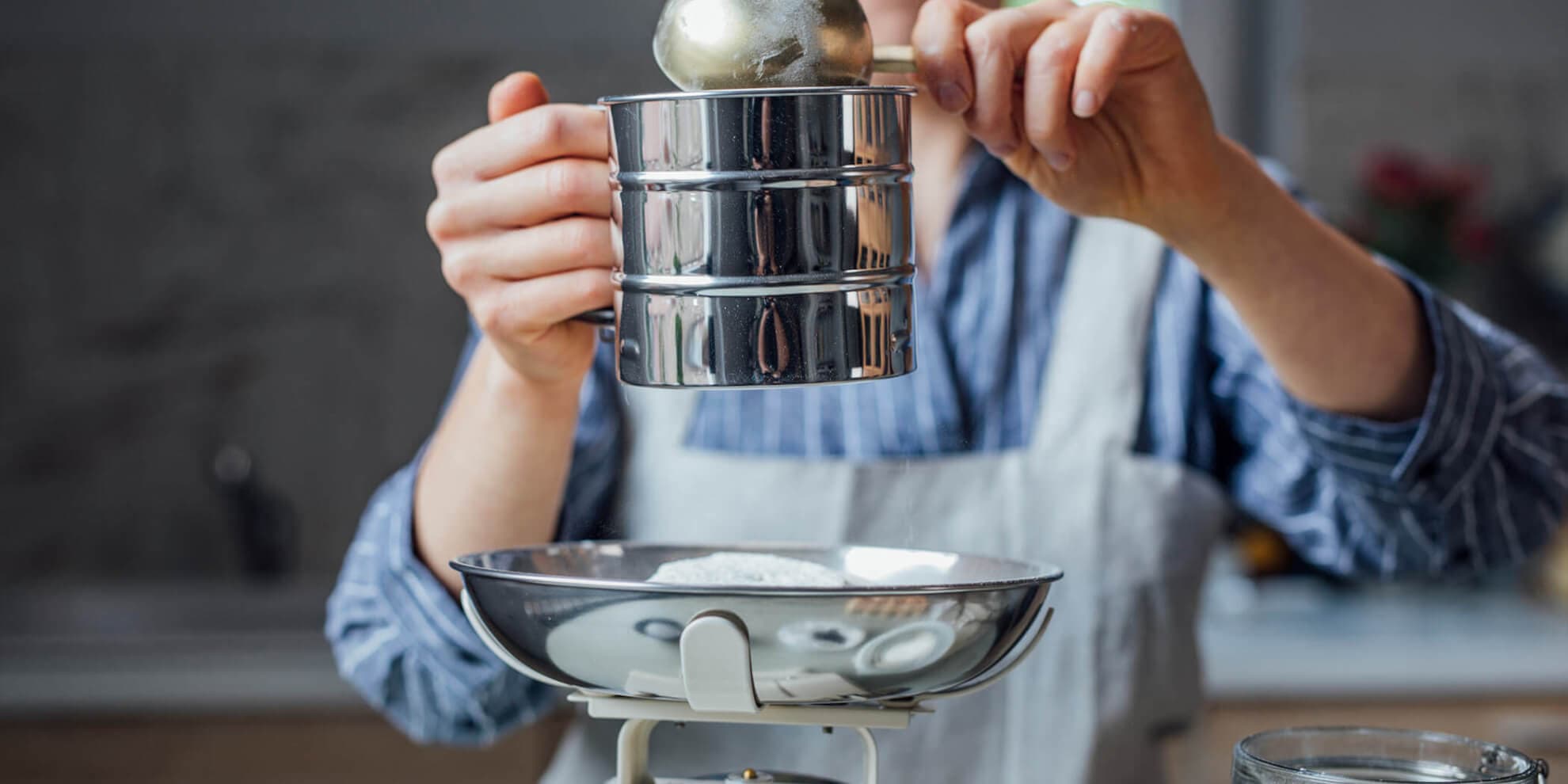
If you’ve found a great recipe with way-too-large portions, check out our recipe converter to halve your ingredients based on the number of servings:
Recipe Converter
Ingredients of original recipe
Enter your ingredients to see the results
How to scale a recipe
Want to avoid ending up with too many leftovers (cold leftover casserole, anyone?)? There’s a formula for that. You can also use our conversion chart for cooking measurements and our guide to adjust your servings.
How to convert a recipe
Recipe converting (or scaling) follows three simple steps:
1. Find out how much you need (portion size)
Scaling a recipe up or down starts with knowing your portion sizes. You may want to triple the recipe for an upcoming breakfast potluck, or cook dinner for two instead of six. Either way, knowing how much to serve keeps that recipe delicious.
Check out our food serving size calculator to save you some of the work.
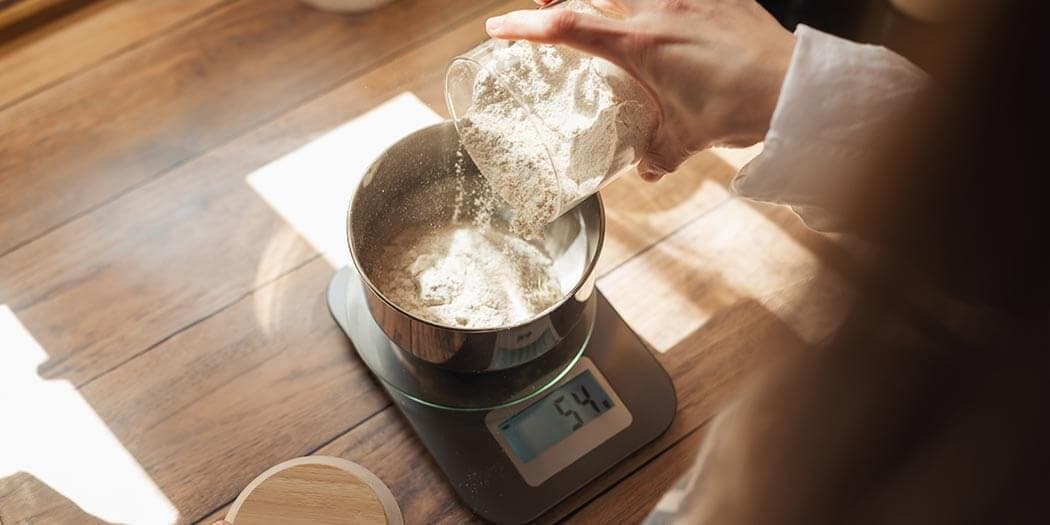
Check the nutrition label to see how many servings are in a package. You can also use measuring cups, a kitchen scale or even your hand to estimate portions.
If you use your hand as a guide, remember that portion sizes may differ based on your hand size. Here’s a rough guide:
Protein: Palms can hold three to four ounces of protein (meat, fish, etc.).
Vegetables and Carbs: Cupped hands hold 1/2 to 1 cup.
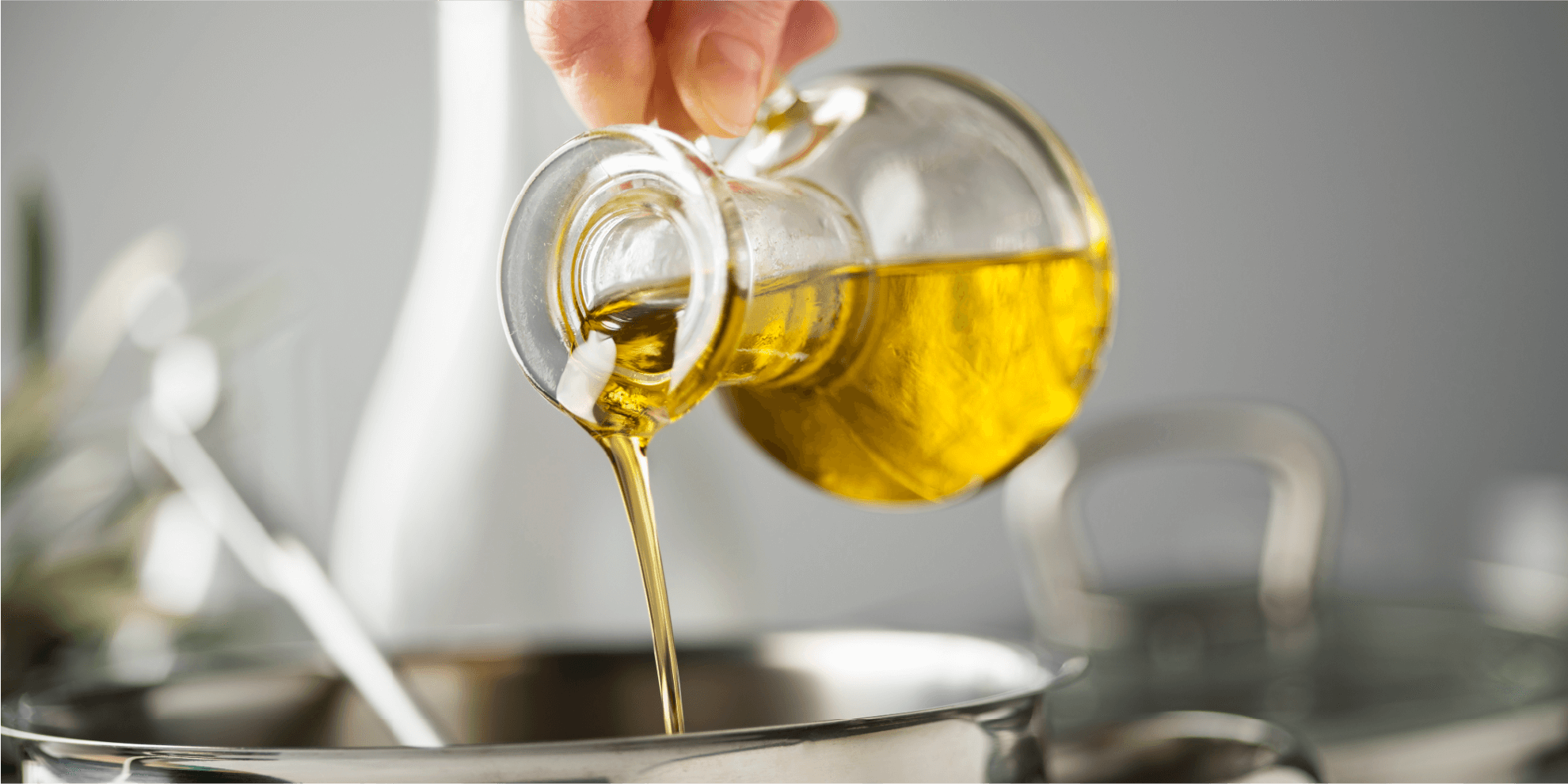
Fats (Butter/Oil): Your thumb holds about 1 to 2 tablespoons.
Avoid “eyeballing” your ingredients for baking recipes to prevent collapsed cakes and questionable pie textures.
Cookware tip: Larger serving sizes may need bigger pots, pans or baking dishes to prevent overcrowding and uneven cooking. |
2. Make your measurements the same
Next, double-check that your measurements match the recipe. Mixing up tablespoons and teaspoons can make a big difference, especially in baking.
If your recipe lists ounces of chicken but your scale only shows pounds, use these cooking measurement conversions to help you out:
Common measurement conversions | |
Measurement | Equivalent |
1 tablespoon (tbsp) | 3 teaspoons (tsp) |
1 fluid ounce (oz) | 2 tablespoons (tbsp) |
1 cup (c) | 8 fluid ounces (oz) |
1 pint (pt) | 2 cups (c) |
1 quart (qt) | 2 pints (pt) |
1 gallon (gal) | 4 quarts (qt) |
1 pound (lb) | 16 ounces (oz) |
You can also look at our calculators and guides to save you some mental heavy lifting:
Grams to cups (converter)
Grams to mL (converter)
Pounds to cups (converter)
Dry to cooked pasta (calculator)
Oil to butter (guide)
Ingredient weight chart (guide)
Now, we get to the fun part: math.
3. Adjust the measurements
Figure out how much you need by dividing your desired number of servings by the original recipe’s servings — this is your conversion factor. Multiply that number by each ingredient measurement to get your new amounts.
Finding the recipe scaling number (conversion factor) | Finding the measurements you actually need |
Portions you need ÷ original recipe portions = conversion factor | Original recipe portions x conversion factor = new amount |
For example, let’s say you want to calculate half of our honey-glazed oven-baked salmon recipe, which calls for 4 cloves of garlic for four servings. Here’s how that would look:
2 ÷ 4 = 0.5 (conversion factor)
4 cloves of garlic × .5 = 2 cloves
If you want to double the recipe instead, here’s what that would look like:
4 ÷ 2 = 2 (conversion factor)
4 cloves of garlic x 2 = 8 cloves
Tips when converting a recipe
When you’re converting a recipe, keep these tips in mind:
Cooking time and temperature: Adjust as needed to ensure your food cooks evenly. Doubling ingredients doesn’t mean you should double the cooking time or temperature.
Consistency and texture: When you scale up or down, certain dry and liquid ingredients may affect the texture differently. Tweak and write down your results to get a good consistency.
Scaling spices: You may not need to increase strong spices like paprika or cayenne as much as milder ones. Taste as you go to find the right balance.
Ingredient availability: If you can’t find enough of a certain ingredient because of seasonal availability or other limits, look for a good substitute that works in your recipe. Instacart lets you choose preferences for ingredient alternatives ahead of time so Shoppers know what to swap.
Bake with care: Yeast, baking powder, and baking soda don’t always scale perfectly when doubling or halving. Check recipes with similar amounts to see what works best.
Adjust for practical measurements: Round to the nearest easy measurement, like using 2 and 3/4 cups instead of 2.87 cups. For baking, use a kitchen scale for the best results.
Bonus cooking calculators
Cooking can be tricky, even if you’ve done it for years. These extra calculators and guides can make things easier when you’re trying out new Instacart recipes.
Create delicious recipes for any party size
Keep our recipe converter, quick guide and extra calculators in your bookmarks for easy access. If you're ever mid-cook and realize you need one more ingredient, skip the store run — get it delivered through Instacart instead.
Recipe calculator FAQ
Can you scale baking recipes like cooking ones?
No, you should scale the leavening ingredients in baking recipes to roughly 1.5 times the amount of other ingredients. This is a rough estimate, so you’ll have to experiment and write down your results until you find the perfect recipe.
How do you “halve” an egg in a recipe?
You can “halve” an egg by cracking it, pouring it into a small bowl, mixing it, and pouring the bowl’s contents where they need to go. You can also consider liquid egg substitutes if you want to avoid dirtying extra dishes.
What’s a conversion factor in cooking?
A conversion factor is the rate at which you adjust the ingredients in a recipe, calculated by dividing the actual serving size by the desired serving size. For example, if your recipe calls for 4 servings and you want 8, it would be 2 (8 ÷ 4 = 2).
Why does my doubled recipe taste different?
Doubled or tripled recipes often taste different because flavor doesn’t scale cleanly. You may need more spices or sauces if those flavors are subtle, and less if they are potent. Experiment and write down your results until you find that perfect flavor.