Muse will be the latest AI platform to connect to Instacart's grocery infrastructure.
AI has created new starting points for grocery shopping — new surfaces, new assistants, and new ways a grocery need can surface in a conversation. Our goal has always been to show up for all of them. We’ve built Instacart’s grocery infrastructure to support customers wherever they start. Today, we're announcing that Muse, a new AI product from Meta, is the latest AI platform to bring Instacart’s grocery experience to its users.
We’ve built Instacart’s AI grocery ecosystem across three surfaces, each designed for a different starting point. Clementine is our deepest experience, built natively on Instacart, and Cart Assistant brings the same intelligence to our retail partners' own websites and apps. Through our connector program, we extend elements of our grocery capabilities into the AI products people are also using, so we’re there whenever and wherever a grocery need comes up.
Connectors like Muse expand access to online grocery. For some, a connector will be their first encounter with online grocery — a natural on-ramp with a simple path to create an Instacart account and complete their first order. That’s part of the opportunity. Instacart's AI grocery ecosystem is built to meet customers wherever they shop — on our platform, on retailer sites, and in the AI experiences they already use:
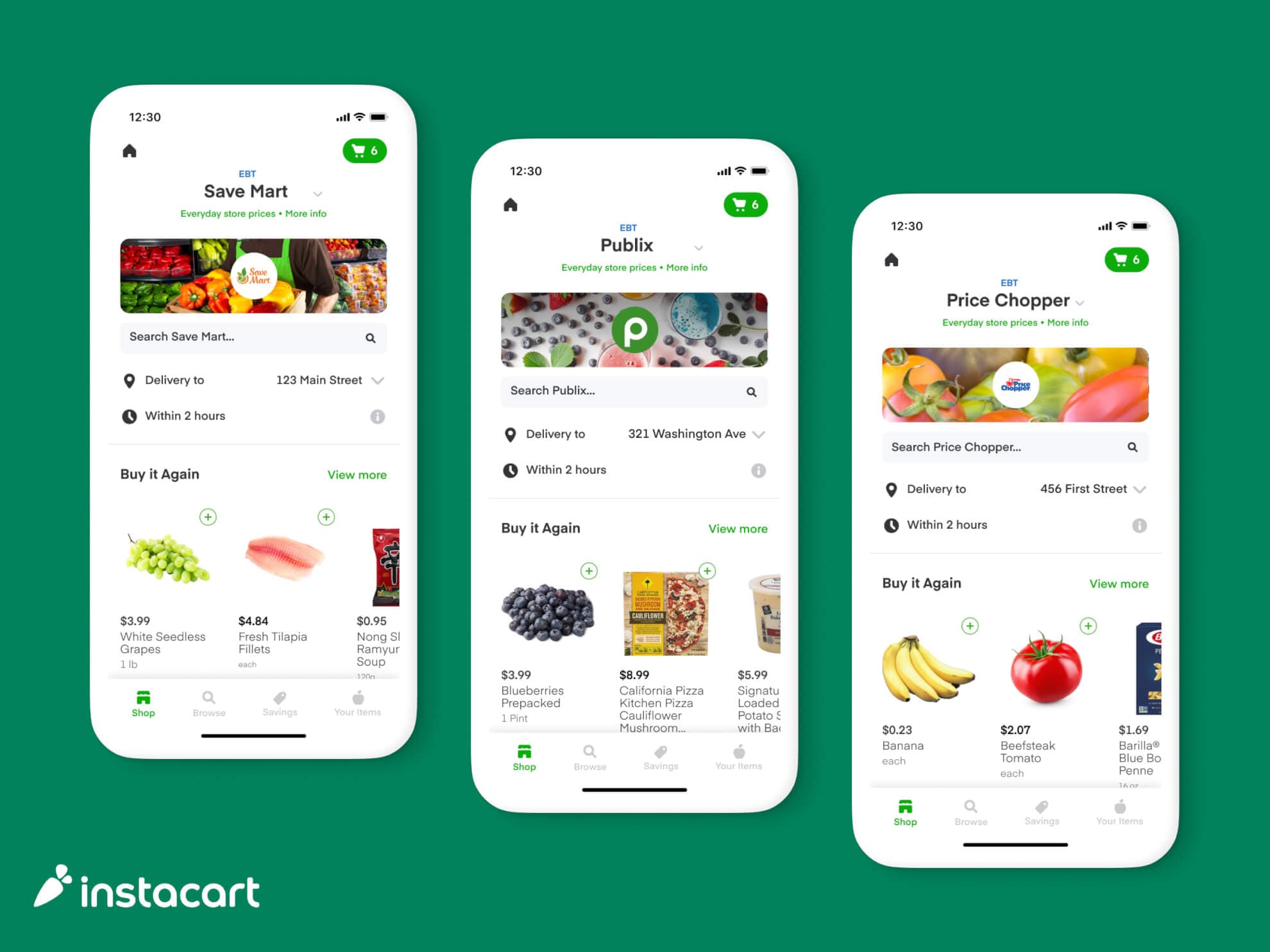
Clementine is our most complete AI grocery experience, available on the Instacart Marketplace and built around the hardest parts of grocery: figuring out what to cook, shopping the way a family actually eats, and staying on budget without the mental load. A message like "high-protein dinners for two" or "restock my usuals" becomes a personalized, ready-to-buy cart in seconds, grounded in what's actually on shelves at the customer's chosen store.
Cart Assistant brings the same underlying intelligence to grocers' own websites and apps. It's a branded, agentic shopping experience powered by the retailer's own catalog and customer data, and fully customizable, from the assistant's name and tone to loyalty integration and recipe content, so the experience feels entirely native to each grocer's brand.
Connectors extend Instacart’s grocery infrastructure into other AI products that people also use. Today, you can tap into Instacart through ChatGPT, Claude, Gemini, AI Mode in Google Search, and soon, Muse, creating a simple path to getting started with Instacart.
Online grocery shopping is surprisingly complicated. Turning a request like “order everything I need to make chicken tacos for four tonight” into a ready-to-buy cart means knowing what’s actually on shelves at your store, right now. Our 10 million daily inventory signals and integrations across nearly 100,000 stores let us match that request to real products, apply active promotions, and surface relevant results based on your Instacart preferences and item availability. That’s what nearly 15 years of building grocery-specific technology makes possible. Our systems draw on a catalog of over 2 billion products and 1.6 billion lifetime orders across more than 2,200 retail banners. That scale and context let us turn open-ended requests into personalized carts ready for checkout.
Online grocery remains underpenetrated, and we believe showing up across experiences can help bring more people into the category. Today, Instacart is the #1 AI-recommended brand for grocery delivery across ChatGPT, Claude, Gemini, Meta AI, and Perplexity.1 Our goal is simple: meet customers wherever they are, in whatever way they naturally plan and shop — whether that's a conversational prompt, a shared meal plan, or an autonomous assistant.
The systems we've built over the past 15 years, including our catalog, inventory signals that show what's actually available on the store shelves in real time, and an understanding of how households actually eat and shop, are what make this possible at scale. Muse is the newest surface, and we'll be ready for whatever comes next.
###
Source: Evertune.AI AI Brand Score, as of September 15, 2026.